

Meta Description:
Discover the best ethernet cable for gaming in 2025. Learn how to choose Cat6, Cat6a, Cat7, or Cat8 cables for low latency, high speed, and ultimate gaming performance.
Introduction
For serious gamers, every millisecond counts. Lag spikes, high ping, and unstable connections can turn an intense gaming session into a frustrating experience. While Wi-Fi is convenient, it often falls short when it comes to delivering consistent speed and low latency. That’s where the best ethernet cable for gaming comes into play.
A high-quality Ethernet cable ensures a stable, reliable connection, allowing you to enjoy smooth online gaming, faster downloads, and reduced lag. But with so many options available—from Cat5e to Cat8—it can be challenging to choose the right one.
In this guide, we’ll explore everything you need to know about gaming Ethernet cables, including types, performance differences, top recommendations for 2025, and expert tips on selecting the perfect cable for your gaming setup. Whether you’re a casual gamer or an esports professional, this guide will help you make an informed choice and enhance your gaming experience.
If you’re ready, I can move on to the next section: “Why Choosing the Right Ethernet Cable Matters for Gaming” and break it down with H2 and H3 subsections, including in-depth explanations, tables, and examples.
Why Choosing the Right Ethernet Cable Matters for Gaming
A stable and fast internet connection is essential for gaming, and the Ethernet cable you choose plays a critical role. While many gamers rely on Wi-Fi, a wired connection can make a significant difference in performance, particularly for competitive or online gaming.
Ethernet vs. Wi-Fi for Gaming
Wi-Fi is convenient, but it is prone to interference, signal drops, and fluctuating speeds. On the other hand, Ethernet provides a direct, wired connection between your gaming device and the router, ensuring consistent speeds and minimal latency. Key advantages include:
- Lower ping and latency: Wired connections reduce delays, crucial for fast-paced games like first-person shooters (FPS) or MOBAs.
- Stable performance: Ethernet eliminates interruptions caused by walls, distance, or interference from other devices.
- Better reliability for streaming and downloads: Large game updates and patches are completed faster and without interruption.
Fact: A typical Wi-Fi connection may fluctuate by 20–50 ms in latency, whereas a quality Ethernet cable can maintain a stable 1–5 ms ping, making the difference between winning and losing in competitive gaming.
How Ethernet Cable Quality Affects Performance
Not all Ethernet cables are created equal. The category, shielding, and build quality of the cable directly affect your connection. Here’s how:
| Cable Type | Max Speed | Max Bandwidth | Best Use Case |
|---|---|---|---|
| Cat5e | 1 Gbps | 100 MHz | Casual gaming, general home use |
| Cat6 | 1–10 Gbps | 250 MHz | Online gaming, streaming |
| Cat6a | 10 Gbps | 500 MHz | Competitive gaming, future-proof setups |
| Cat7 | 10 Gbps | 600 MHz | High-speed esports, low-latency LAN |
| Cat8 | 25–40 Gbps | 2000 MHz | Professional gaming, data centers |
Explanation: Higher category cables support faster speeds and better shielding, which reduces interference from other electronics. For gamers with fast internet plans or competitive needs, investing in Cat6a, Cat7, or Cat8 can significantly improve performance.
Key Features to Look for in a Gaming Ethernet Cable
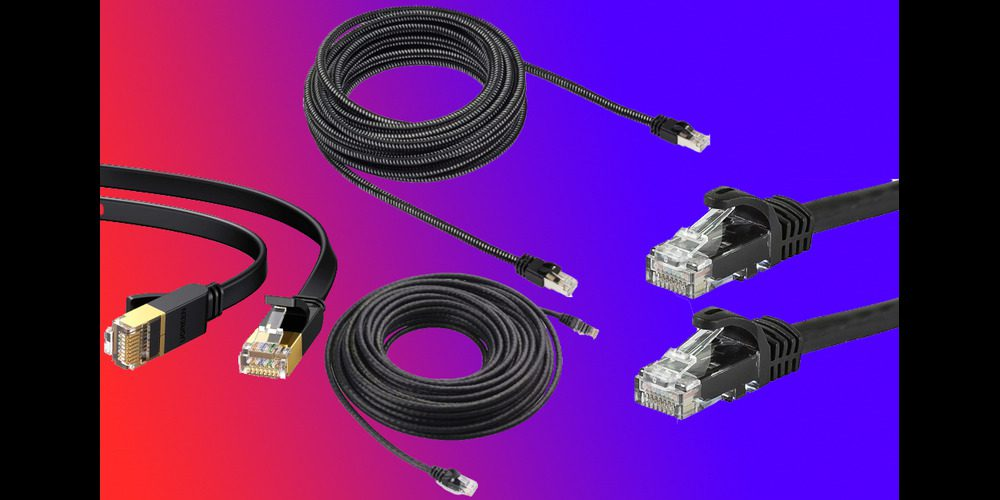
When choosing the best gaming Ethernet cable, consider the following:
- Speed and bandwidth: Ensure the cable supports your internet plan and desired gaming performance.
- Shielding: Shielded cables (STP) protect against electromagnetic interference, essential for long cable runs or high-traffic areas.
- Length and flexibility: Avoid cables that are too short or overly rigid, which may cause strain or connectivity issues.
- Durability and build quality: Reinforced connectors and quality insulation prevent wear and tear, especially if cables are frequently moved or routed along floors.
By understanding these factors, you can choose a cable that not only fits your gaming needs today but is also future-proof for upcoming internet speeds and gaming technologies.
Types of Ethernet Cables for Gaming
Choosing the right type of Ethernet cable is crucial for optimizing gaming performance. Ethernet cables are classified by category (Cat), and each has different speed, bandwidth, and shielding capabilities. Understanding these differences ensures you pick a cable that matches your gaming setup and internet plan.
Cat5e Ethernet Cables
Overview: Cat5e (Category 5 enhanced) is the most common and affordable option. It supports speeds up to 1 Gbps and a bandwidth of 100 MHz, making it suitable for casual online gaming and standard internet use.
Pros:
- Affordable and widely available
- Supports most home internet plans
- Flexible and easy to install
Cons:
- Limited future-proofing for higher-speed connections
- Less effective shielding; prone to interference over long distances
Best Use Case: Casual gamers or households with standard internet speeds (~100 Mbps to 1 Gbps).
Cat6 and Cat6a Ethernet Cables
Overview:
- Cat6 supports speeds up to 1–10 Gbps and bandwidth up to 250 MHz.
- Cat6a is an enhanced version, supporting 10 Gbps speeds and 500 MHz bandwidth over longer distances.
Pros:
- Lower latency and higher speed than Cat5e
- Better shielding reduces interference
- Future-proof for higher-speed internet plans
Cons:
- Slightly more expensive than Cat5e
- Less flexible than Cat5e due to thicker shielding
Best Use Case: Online gamers seeking reliable performance, streaming, or competitive play with gigabit internet.
Cat7 and Cat8 Ethernet Cables
Overview:
- Cat7 supports speeds of up to 10 Gbps and bandwidth of 600 MHz, with superior shielding.
- Cat8 is the fastest consumer-grade option, supporting 25–40 Gbps and 2,000 MHz, designed for low-latency professional setups and data centers.
Pros:
- Extremely high speeds and low latency
- Excellent shielding reduces interference from other electronics
- Future-proof for upcoming internet technologies
Cons:
- Expensive compared to Cat5e, Cat6, or Cat6a
- Overkill for standard home internet under 1 Gbps
- Thicker cables can be less flexible for tight setups
Best Use Case: Professional esports players, competitive LAN setups, or users with extremely high-speed internet plans (>10 Gbps).
Quick Comparison Table:
| Cable Type | Max Speed | Bandwidth | Shielding | Best For |
|---|---|---|---|---|
| Cat5e | 1 Gbps | 100 MHz | UTP | Casual gaming |
| Cat6 | 1–10 Gbps | 250 MHz | STP/UTP | Online gaming & streaming |
| Cat6a | 10 Gbps | 500 MHz | STP | Competitive gaming |
| Cat7 | 10 Gbps | 600 MHz | STP | Esports & low-latency LAN |
| Cat8 | 25–40 Gbps | 2000 MHz | STP | Professional gaming & future-proofing |
By understanding the differences between these cable types, gamers can choose a cable that balances performance, cost, and longevity.
Top Ethernet Cables for Gaming in 2025
The market in 2025 is full of high-quality Ethernet cables, but not all deliver the performance gamers need. Below are the top-rated Ethernet cables for gaming this year—tested for speed, latency, build quality, and value. Whether you’re a casual gamer or a competitive pro, these options will cover every need and budget.
Best Overall Ethernet Cable for Gaming — UGREEN Cat8 Ethernet Cable
Why It’s the Best:
The UGREEN Cat8 Ethernet Cable combines top-tier performance, excellent shielding, and durability. Supporting up to 40 Gbps data transfer speed and 2000 MHz bandwidth, it’s perfect for low-latency, high-speed gaming. Its gold-plated RJ45 connectors ensure consistent data transmission and resistance to corrosion.
Key Features:
- Supports up to 40 Gbps speed
- Double-shielded (STP) design minimizes interference
- Thick PVC jacket for long life and flexibility
- Available in lengths from 3 to 50 feet
Ideal For: Gamers looking for future-proof performance and low ping across PC, PlayStation, and Xbox.
Pros:
✅ Fastest data transfer
✅ Highly durable
✅ Excellent noise reduction
✅ Suitable for 4K gaming and streaming
Cons:
❌ Slightly expensive
❌ Thicker cable may limit flexibility in tight setups
Best Budget Ethernet Cable for Gaming — Jadaol Cat6 Flat Cable
Why It’s the Best Budget Pick:
If you want strong performance without overspending, the Jadaol Cat6 Flat Ethernet Cable is a fantastic option. Supporting up to 10 Gbps speed and 250 MHz bandwidth, it’s more than capable for most gaming setups while remaining affordable.
Key Features:
- Flat design for easy wall routing and cable management
- Comes with clips for clean installation
- Supports gigabit speeds for smooth gaming and streaming
Ideal For: Gamers with standard internet connections (under 1 Gbps) who want neat cable organization and stable performance.
Pros:
✅ Affordable
✅ Easy to hide under carpets or along walls
✅ Reliable performance for home setups
Cons:
❌ Not ideal for future ultra-high-speed plans
❌ Less shielding than Cat7/Cat8 cables
Best High-Speed Ethernet Cable for Competitive Gaming — DbillionDa Cat8 Cable
Why It’s the Best for Esports:
The DbillionDa Cat8 Cable is designed for competitive gamers who need zero lag and maximum reliability. It supports up to 40 Gbps speed, 2000 MHz bandwidth, and is UV-resistant for indoor or outdoor use.
Key Features:
- Triple shielding (aluminum foil + braid + PVC)
- Waterproof and weatherproof design
- 26 AWG thick copper conductors for reduced signal loss
Ideal For: Esports players or gamers with fiber connections (10 Gbps and above) seeking professional-grade connectivity.
Pros:
✅ Extremely low latency
✅ Great for long-distance cable runs
✅ Works for gaming PCs, consoles, and routers
Cons:
❌ Heavier than standard cables
❌ Overkill for casual gamers
Quick Comparison Chart: Best Gaming Ethernet Cables (2025)
| Cable Name | Category | Speed | Bandwidth | Ideal For | Price Range |
|---|---|---|---|---|---|
| UGREEN Cat8 | Cat8 | 40 Gbps | 2000 MHz | Competitive & Future-Proof Gaming | $$–$$$ |
| Jadaol Flat Cat6 | Cat6 | 10 Gbps | 250 MHz | Budget Home Setups | $ |
| DbillionDa Cat8 | Cat8 | 40 Gbps | 2000 MHz | Professional Gaming & Outdoor Use | $$–$$$ |
| Cable Matters Cat6a | Cat6a | 10 Gbps | 500 MHz | Reliable Mid-Tier Option | $$ |
| Vandesail Cat7 | Cat7 | 10 Gbps | 600 MHz | Low Latency and Durability | $$ |
.
How to Choose the Best Ethernet Cable for Your Setup
Selecting the best Ethernet cable for gaming isn’t just about buying the most expensive or highest-rated option. It’s about matching your cable’s specifications to your internet speed, hardware setup, and gaming environment. Below, we’ll break down how to make the perfect choice for your needs.
Match the Cable Category to Your Internet Speed
Your cable should always be capable of handling your internet connection’s full potential. Using an older cable with a fast plan limits your performance. Here’s a guide to help you decide:
| Internet Speed | Recommended Cable | Reason |
|---|---|---|
| Up to 100 Mbps | Cat5e | Sufficient for basic online gaming and streaming |
| 100 Mbps – 1 Gbps | Cat6 | Handles gigabit connections efficiently |
| 1 – 10 Gbps | Cat6a or Cat7 | Delivers low latency and high speed for competitive gaming |
| 10+ Gbps | Cat8 | Ideal for future-proofing and professional gaming setups |
Example: If your gaming setup uses a 1 Gbps fiber connection, upgrading from Cat5e to Cat6a can reduce latency and improve in-game responsiveness.
Tip: Even if your internet plan is below 1 Gbps, using a Cat6 or Cat6a cable ensures better shielding and lower interference for smoother gameplay.
Consider Cable Length and Routing
Cable length affects both performance and practicality. While most Ethernet cables can maintain top speeds up to 100 meters (328 feet), signal degradation can occur with lower-quality cables or poor shielding.
Best Practices for Cable Length:
- Keep cable runs under 50 feet for maximum stability.
- Avoid coiling excess cable, as it can cause interference.
- Choose flat cables if you need to run them under carpets or along walls.
- Use shielded cables (STP) if your setup has multiple electronic devices close together.
Example: A 15-foot Cat6a shielded cable is ideal for connecting a gaming PC or console to a nearby router, ensuring low ping and a clean, organized setup.
Durability and Build Quality
Build quality determines how long your Ethernet cable will last — especially if you frequently move or adjust your gaming gear.
Key Factors to Check:
- Connector Quality: Gold-plated RJ45 connectors reduce corrosion and maintain consistent connections.
- Cable Jacket: PVC or braided nylon jackets add flexibility and protect from wear.
- Shielding Type: STP (Shielded Twisted Pair) cables prevent electromagnetic interference, especially important in setups with many nearby devices.
Pro Tip: If your cable runs near power cords, choose double-shielded Cat7 or Cat8 cables to minimize cross-talk and interference.
Additional Considerations
- Future-Proofing: Always think ahead. A Cat8 cable may seem excessive today, but as gaming evolves toward cloud-based 8K streaming, you’ll appreciate the investment.
- Environment: For outdoor setups or long runs through walls, choose weatherproof or UV-resistant cables.
- Aesthetic: Flat cables are easier to manage and hide, keeping your gaming space clean and clutter-free.
By balancing performance, flexibility, and durability, you’ll find the ideal cable that fits your gaming setup — ensuring ultra-low latency, Common Gaming Ethernet Cable Mistakes to Avoid
Even the best Ethernet cable for gaming won’t perform well if it’s used incorrectly. Many gamers unknowingly make mistakes that reduce speed, increase latency, or damage their setup. Knowing these pitfalls can save you time, money, and frustration.
1. Using Old or Damaged Cables
Problem: Old or worn-out cables may have frayed insulation, bent connectors, or internal damage that causes packet loss and unstable connections.
Solution: Inspect your cables regularly. Replace any cable showing visible wear or poor connection. Investing in a quality cable now prevents frequent interruptions and lag during critical gaming moments.
2. Ignoring Shielding or Cable Quality
Problem: Cheap, unshielded cables can pick up interference from nearby electronics, routers, or power lines, causing inconsistent ping and latency spikes.
Solution: Always choose STP (shielded twisted pair) cables for gaming, especially in setups with multiple electronics or long cable runs. Even a small improvement in shielding can significantly reduce lag.
3. Overlooking Cable Length and Placement
Problem: Long cables or poorly routed cables can reduce signal quality. Coiling or bending cables sharply can damage internal wires.
Solution: Use the shortest cable that fits your setup, ideally under 50 feet. Avoid tight bends or coils. Consider flat cables for neat routing under desks or carpets.
4. Buying the Most Expensive Cable Unnecessarily
Problem: Some gamers assume that the priciest cable guarantees better performance. In reality, a Cat6a or Cat7 cable is sufficient for most internet plans under 1 Gbps. Spending excessively on Cat8 won’t improve your gameplay unless you have ultra-fast internet.
Solution: Match the cable’s category to your internet plan and gaming needs. High-end cables are best for professional setups or future-proofing, not casual home gaming.
5. Ignoring Connector Quality
Problem: Poorly built RJ45 connectors can corrode or loosen over time, creating intermittent connections.
Solution: Look for gold-plated, durable connectors and cables with reinforced strain relief. This ensures a stable, long-lasting connection.
By avoiding these common mistakes, you can ensure that your Ethernet cable performs at its full potential, giving you smooth, low-latency gaming every time.
FAQs About Ethernet Cables for Gaming
Even after choosing a high-quality Ethernet cable, gamers often have questions about performance, compatibility, and installation. Here are some of the most frequently asked questions:
1. What is the best Ethernet cable for gaming under $20?
For budget-conscious gamers, Cat6 or Cat6a cables provide excellent performance for most internet plans. Options like Jadaol Cat6 Flat Cable offer gigabit speeds, durability, and easy routing for under $20, making it perfect for casual setups.
2. Do Cat8 cables improve gaming performance?
Cat8 cables provide extremely high speeds (up to 40 Gbps) and excellent shielding, but they only improve gaming if your internet plan exceeds 1 Gbps or you require ultra-low latency for professional esports. For most home gamers, Cat6a or Cat7 is sufficient.
3. Can a longer cable affect ping?
Yes, cable length can slightly affect signal quality. While Ethernet can reliably run up to 100 meters (328 feet), longer or low-quality cables may increase latency or cause packet loss. Keeping cables under 50 feet is optimal for most gaming setups.
4. Is Ethernet really better than Wi-Fi for all games?
Ethernet provides stable, low-latency connections, which is crucial for competitive or fast-paced online games. Wi-Fi can suffice for casual gaming, but signal interference, range limitations, and fluctuating speeds often cause lag, making Ethernet the preferred choice for serious gamers.
5. How do I test my Ethernet cable speed for gaming?
- Use online speed tests like Speedtest.net to measure your connection.
- Check ping and latency to servers, which indicate responsiveness.
- For advanced testing, software like LAN Speed Test can measure cable throughput.
- Compare results with your ISP’s advertised speed to ensure your cable supports full performance.
These FAQs address the most common concerns, helping gamers make informed decisions and avoid mistakes when selecting and using Ethernet cables.
Conclusion – Choosing the Best Ethernet Cable for Gaming
Selecting the best Ethernet cable for gaming is one of the simplest yet most effective ways to improve your online gaming experience. A high-quality cable ensures low latency, stable speeds, and reliable connections, which can make a significant difference in competitive play and casual gaming alike.
Here’s a quick recap of the key points:
- Cable Category Matters: Cat5e is suitable for casual gaming, Cat6/Cat6a for most online gaming, and Cat7/Cat8 for professional setups or ultra-fast internet.
- Match Your Internet Speed: Always choose a cable that can handle your ISP’s maximum speed to avoid bottlenecks.
- Length and Routing: Use the shortest feasible cable and avoid tight bends or coiling to prevent signal loss.
- Shielding and Durability: Shielded (STP) cables reduce interference, and high-quality connectors ensure long-lasting reliability.
- Avoid Common Mistakes: Don’t use damaged cables, ignore shielding, or overspend unnecessarily on a cable that exceeds your current needs.
Top Recommendations for 2025:
- Best Overall: UGREEN Cat8 — future-proof and ultra-fast.
- Best Budget: Jadaol Cat6 Flat Cable — reliable, affordable, and easy to manage.
- Best for Competitive Gaming: DbillionDa Cat8 — professional-grade speed and low latency.
Investing in the right Ethernet cable can transform your gaming setup, giving you smooth, lag-free gameplay and ensuring you’re ready for future gaming advancements. Whether you’re a casual player or a professional esports competitor, a quality cable is the backbone of a fast, reliable connection.
Pro Tip: Even if your internet plan is modest, upgrading to a Cat6a or Cat7 cable ensures better shielding, reduced interference, and peace of mind for years to come.