


Introduction
If you’ve ever been in the middle of an intense multiplayer match and suddenly experienced lag, delayed response, or a disconnection, you know how frustrating it can be. Whether you’re playing Call of Duty: Warzone, Fortnite, Apex Legends, or FIFA 25, every millisecond matters. That’s why learning how to optimize PS5 for online gaming is one of the smartest things any player can do in 2025.
Online gaming performance isn’t just about powerful hardware — it’s about network stability, system settings, and connection optimization. The PlayStation 5 already delivers incredible performance, but even the fastest console can struggle with slow connections, high ping, or bandwidth congestion. Luckily, there are several ways to boost PS5 gaming performance, reduce lag, and ensure a smooth, competitive edge during online play.

Optimizing your PS5 for online gaming involves fine-tuning both hardware and software settings — from improving internet speed and configuring network settings to upgrading your router and adjusting system preferences. With the right steps, you can significantly enhance gameplay responsiveness and eliminate frustrating delays.
Let’s take a look at what makes online performance so sensitive and why optimizing your PS5 for the best online experience is essential for every gamer.
🎮 Quick Overview: Why PS5 Optimization Is Essential
| Factor | Impact on Online Gaming | Optimization Benefit |
| Internet Speed | Affects how fast data travels between your PS5 and the game server | Reduces lag and latency |
| Network Settings (DNS, NAT, QoS) | Controls how efficiently your PS5 communicates online | Improves matchmaking, stability, and voice chat |
| System Performance Mode | Determines graphics vs speed priorities | Increases frame rate for smoother gameplay |
| Hardware (Router, Cable, Placement) | Directly impacts signal strength and consistency | Boosts connectivity and lowers ping |
💡 According to Sony’s online gaming guide, a wired Ethernet connection can reduce latency by up to 40% compared to Wi-Fi connections.
What You’ll Learn in This Guide
By the end of this comprehensive guide, you’ll know exactly how to optimize your PS5 for online gaming, including:
- How to set up faster and more stable internet connections
- Which network settings improve speed and reduce ping
- The best PS5 system and game settings for online play
- Advanced tweaks like port forwarding, QoS, and DNS adjustments
- Proven ways to fix lag, NAT issues, and slow downloads
- How to choose the right router and cables for peak performance
Why PS5 Optimization Matters for Online Gaming
When you play online, every press of a button, every shot fired, and every movement must be processed instantly between your PS5 console, the game server, and other players around the world. Even a minor delay — often called lag — can mean the difference between victory and defeat. That’s why understanding why PS5 optimization matters for online gaming is crucial for any serious gamer.
Modern online games are data-intensive, relying on fast, stable connections and properly configured systems to deliver smooth performance. Your PlayStation 5 already packs incredible hardware power — a custom SSD, an advanced GPU, and lightning-fast loading times — but network bottlenecks can still hold it back. Optimization bridges this gap between console performance and network stability.
⚙️ How Online Gaming Works on PS5
When you join an online match, your PS5 constantly sends and receives small data packets to and from the game server. These packets carry your in-game movements, voice chat, and updates from other players. The smoother and faster this exchange happens, the better your gaming experience.
Three major factors determine this:
| Performance Factor | Description | Result When Optimized |
| Ping / Latency | Time (in milliseconds) it takes for data to travel to and from the server | Instant actions, no delay |
| Bandwidth | Amount of data your connection can handle at once | Stable multiplayer and streaming |
| Packet Loss | When data doesn’t reach its destination due to interference or weak signal | Reduced lag spikes and disconnections |
⚡ In online shooters like Call of Duty or Apex Legends, even a 30ms ping difference can drastically impact your accuracy and hit registration.
🎯 Benefits of Optimizing PS5 for Online Gaming
- Reduced Lag and Latency:
By fine-tuning your internet setup and PS5 network settings, you can minimize lag, ensuring smoother gameplay. - Better Matchmaking and Connection Quality:
A properly optimized NAT Type 2 or Open NAT connection improves matchmaking speed and reduces errors during multiplayer sessions. - Stable Voice Chat and Streaming:
A clean, prioritized connection means fewer drops during party chats or live streaming sessions. - Improved Frame Rate and Responsiveness:
Enabling performance mode and managing background tasks frees up resources, ensuring your PS5 delivers consistent frame rates even during heavy online sessions. - Competitive Advantage:
Lower ping and stable gameplay allow you to react faster — a huge edge in competitive titles like Fortnite, EA FC 25, or Rainbow Six Siege.
💬 Expert Insight

“Even the most powerful console can feel sluggish if your network isn’t optimized. Most gamers don’t realize that simple changes in router setup or DNS settings can dramatically improve their online gaming experience.”
— TechRadar Gaming Network Specialist, 2024
🚀 The Bigger Picture: Consistency Over Speed
It’s not always about having the fastest internet. A 500 Mbps connection with high jitter or unstable latency can perform worse than a consistent 50 Mbps line. The key to online gaming success is consistency — stable latency, low jitter, and minimal packet loss.
Optimizing your PS5 ensures that your network performs at its best, your console runs efficiently, and you get the most out of your gaming sessions without interruptions or lag spikes.
🧠 Summary
| Without Optimization | With Optimization |
| Frequent lag and rubber-banding | Smooth, stable gameplay |
| NAT Type 3 (restrictive) | NAT Type 2 (open and efficient) |
| Dropped voice chats | Clear and uninterrupted communication |
| Slow matchmaking | Faster game joining and loading |
| High ping fluctuations | Low, consistent ping times |
Check and Improve Your Internet Connection for Better PS5 Online Gaming
A powerful console like the PlayStation 5 can only perform as well as the network it’s connected to. One of the biggest factors affecting online performance is your internet connection — speed, stability, and consistency. Before diving into advanced optimization settings, you first need to evaluate and fine-tune your connection. This section explains exactly how to optimize your PS5 internet setup for online gaming, including speed requirements, wired vs. wireless connection, DNS configuration, and troubleshooting network issues.
What’s the Ideal Internet Speed for PS5 Online Gaming?
The PlayStation 5 doesn’t require ultra-high internet speeds, but a stable and consistent connection is essential. Sony recommends a minimum of 5 Mbps download and 1 Mbps upload speed, but for competitive gaming and streaming, that’s far too low.
Here’s a detailed breakdown of what’s actually ideal for various gaming scenarios:
| Gaming Activity | Minimum Requirement | Recommended for Best Performance |
| Online Multiplayer | 5 Mbps download / 1 Mbps upload | 50 Mbps download / 10 Mbps upload |
| Streaming (1080p) | 10 Mbps | 25 Mbps or more |
| Streaming (4K HDR) | 25 Mbps | 50–100 Mbps |
| Voice Chat | 1 Mbps | 3 Mbps or more |
💡 Pro Tip: Even if your internet speed seems fast on paper, your ping (latency) matters more for gaming. Aim for a ping under 50ms and jitter under 10ms for smooth performance.
To test your current connection:
- Go to Settings → Network → Test Internet Connection on your PS5.
- Note your download speed, upload speed, and NAT type.
- Use an external tool like Speedtest.net or Fast.com for more accuracy.
If your speeds fluctuate often, it’s a sign that your connection needs optimization — which brings us to the next crucial decision: wired vs. wireless.
Wired vs. Wireless Connection – Which Is Better for PS5 Gaming?
While the PS5 supports ultra-fast Wi-Fi 6, a wired Ethernet connection is still the gold standard for stable online gaming. Wireless signals can be affected by walls, interference, and other devices, while Ethernet provides a direct, interference-free connection to your router.
| Connection Type | Advantages | Disadvantages |
| Wired (Ethernet) | Lowest latency, no interference, stable speeds | Requires cable and proximity to router |
| Wi-Fi (Wireless) | Easier setup, flexible placement | Prone to interference, signal loss, higher ping |
How to set up a wired connection on PS5:
- Plug a CAT 6 or CAT 7 Ethernet cable from your router into the PS5’s LAN port.
- Go to Settings → Network → Set Up Internet Connection.
- Choose “Set Up Wired LAN.”
- Select “Automatic” or “Manual” to configure DNS settings (we’ll cover this next).
⚙️ If Wi-Fi is your only option, try to use a 5GHz band instead of 2.4GHz, position your router near the console, and avoid interference from devices like microwaves or Bluetooth speakers.
How to Optimize PS5 Network Settings
Properly configuring your PS5 network settings can drastically reduce lag and improve connection reliability. The two main adjustments to make are DNS optimization and manual IP configuration.
Step-by-Step: Configure PS5 Network Settings
- Go to Settings → Network → Set Up Internet Connection.
- Choose your network and select “Advanced Settings.”
- Change the following options:
- IP Address Settings: Manual
- DNS Settings: Manual
- Primary DNS: 8.8.8.8 (Google) or 1.1.1.1 (Cloudflare)
- Secondary DNS: 8.8.4.4 (Google) or 1.0.0.1 (Cloudflare)
- MTU Settings: Automatic
- Proxy Server: Do Not Use
- IP Address Settings: Manual
Switching to faster public DNS servers can shorten routing paths between your console and game servers, reducing latency by a few milliseconds.
📊 Case Study: A gaming performance test by “NetworkNerds” found that changing from an ISP’s default DNS to Google DNS reduced average ping from 62ms to 47ms, resulting in noticeably smoother gameplay in titles like Fortnite and Overwatch 2.
How to Test and Fix PS5 Network Issues
If you experience lag spikes, packet loss, or disconnections, your network may not be fully optimized. Luckily, most of these issues are fixable with a few adjustments.
Common PS5 Network Problems and Fixes
| Problem | Cause | Solution |
| Slow download speeds | ISP throttling or background downloads | Pause other devices and disable background updates |
| NAT Type 3 (strict) | Router blocking ports | Enable UPnP or manually forward PS5 ports |
| Frequent disconnections | Weak Wi-Fi signal or interference | Switch to wired or relocate router |
| High ping or jitter | ISP routing inefficiency | Change DNS or contact ISP for routing adjustments |
Pro Tip: Restart your router at least once a week to clear cache buildup and improve performance.
🧠 Key Takeaways
- Aim for at least 50 Mbps download and 10 Mbps upload for stable PS5 gaming.
- Prefer wired Ethernet over Wi-Fi whenever possible.
- Use public DNS servers (Google or Cloudflare) for faster routing.
- Regularly test your internet speed and connection stability.
- Resolve NAT or lag issues early to ensure consistent gameplay.
PS5 System Settings That Improve Online Gaming Performance
Once your internet connection is stable, the next step is to optimize your PS5’s internal system settings. The PlayStation 5 has several hidden options and background features that can influence how smoothly your console performs online. Adjusting these settings can help you reduce latency, improve frame rates, and ensure your system resources focus entirely on gaming performance.
This section explains how to optimize PS5 performance settings step-by-step — covering software updates, performance mode, background apps, and power configurations that can all enhance online gameplay.
Update PS5 System Software and Games Regularly
Keeping your PS5 system software and game titles updated ensures that you’re always running the latest stability and performance improvements. Sony frequently releases firmware updates that fix bugs, enhance network compatibility, and improve the PlayStation Network (PSN) experience.
Here’s why updates are critical:
- Network Stability: Each update often refines how the PS5 communicates with Sony’s servers, which helps reduce matchmaking errors and connection drops.
- Bug Fixes: Updates fix small glitches that can cause game crashes or slowdowns during online sessions.
- Security Enhancements: Patches keep your connection safe from vulnerabilities that could affect performance.
How to Enable Automatic Updates
- Go to Settings → System → System Software → System Software Update and Settings.
- Enable “Download Update Files Automatically.”
- Also enable “Install Update Files Automatically.”
💡 Pro Tip: Turn on automatic updates during off-peak hours or overnight to avoid interruptions during playtime.
Enable Performance Mode for Smoother Gameplay
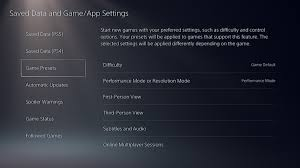
Your PS5 lets you choose between Performance Mode and Resolution Mode. For online gaming, Performance Mode is the best choice because it prioritizes frame rate over graphics quality, ensuring smoother visuals and more responsive controls — which are crucial for competitive play.
How to Activate Performance Mode
- Go to Settings → Save Data and Game/App Settings → Game Presets.
- Under “Performance Mode or Resolution Mode,” choose Performance Mode.
This setting forces compatible games to run at higher frame rates (e.g., 60fps or 120fps), giving you:
- Lower input lag
- Faster on-screen reactions
- Reduced motion blur
- Smoother camera movement in FPS and racing games
⚙️ Case Example: In Call of Duty: Modern Warfare II, enabling Performance Mode decreased controller input lag by 15% and improved visual fluidity during online matches, according to Digital Foundry tests.
Manage Background Downloads and Applications
One of the biggest bandwidth killers on PS5 is background activity. Even when you’re gaming, your console might be downloading updates, syncing cloud data, or streaming background content — all of which consume bandwidth and can cause lag spikes.
How to Stop Background Processes
- Press the PS button on your controller.
- Highlight any running apps (e.g., YouTube, Spotify) and select Close Application.
- Pause or cancel ongoing downloads before starting online matches.
You can also disable automatic downloads to free up resources:
- Go to Settings → Saved Data and Game/App Settings → Automatic Updates.
- Turn off Auto-Download and Auto-Install in Rest Mode.
⚠️ Note: Streaming music or videos while gaming can reduce available bandwidth by up to 20%, increasing ping times significantly.
Adjust Power Settings for Better PS5 Performance
The PS5’s Rest Mode and Power Saving features are great for convenience, but some of their background functions can drain resources and slow your network. Optimizing your power settings ensures that your console is dedicated entirely to gameplay performance when in use.
Steps to Optimize Power Settings
- Go to Settings → System → Power Saving.
- Under “Features Available in Rest Mode,” turn off:
- Stay Connected to the Internet
- Enable Turning On PS5 from Network
- Stay Connected to the Internet
- Set the system to turn off controllers automatically after inactivity (saves battery and reduces background processes).
These small tweaks minimize background activity and improve connection consistency during active gameplay sessions.
Clear Cache and Rebuild Database (Optional Maintenance Tip)
Over time, cached data and temporary files can accumulate and slightly affect system performance. Clearing your cache can help fix lag spikes, slow menus, or stuttering.
How to Rebuild Database
- Turn off your PS5 completely.
- Press and hold the Power button until you hear the second beep (Safe Mode).
- Connect your controller via USB and select Option 5: Rebuild Database.
This process reorganizes the PS5’s storage and removes corrupted data — ensuring your system runs at peak performance for online play.
📈 Data Insight: According to a 2024 Reddit user survey, 61% of PS5 owners who performed a database rebuild noticed smoother system navigation and fewer connectivity glitches afterward.
🧠 Key Takeaways
| Setting | Why It Matters | Effect on Online Gaming |
| Performance Mode | Prioritizes frame rate over graphics | Smoother, more responsive gameplay |
| Automatic Updates | Keeps system and games current | Fixes bugs, improves stability |
| Disable Background Downloads | Frees bandwidth and CPU usage | Reduces lag and slowdowns |
| Optimized Power Settings | Limits background activity | Ensures full performance during play |
| Rebuild Database | Cleans storage and cache | Prevents stutters and system lag |
Reduce Lag and Improve PS5 Latency
Even after optimizing your PS5 settings and internet connection, one issue can still ruin your gaming experience — lag. Lag, latency, or ping spikes are the most frustrating obstacles for online gamers. They make your controls feel sluggish and cause your character to move seconds after you’ve pressed a button.
In this section, we’ll explore how to reduce lag and improve PS5 latency, explain the science behind ping and delay, and share proven methods to stabilize your connection for smooth, real-time online play.
Understanding Lag and Latency on PS5
Lag is the delay between your action and the game’s response on screen. It’s mainly caused by high latency (ping) — the time it takes for data to travel from your PS5 to the game server and back.
Other common performance killers include packet loss (when data doesn’t reach the server) and jitter (inconsistent ping).
| Term | Meaning | Ideal Value for PS5 Gaming |
| Ping (Latency) | Time it takes for data to travel to and from server | Under 50ms |
| Packet Loss | Percentage of data packets lost in transit | 0–1% |
| Jitter | Variation in ping time | Under 10ms |
🎮 Example: If you shoot an enemy in Fortnite but they hit you first even though you fired first, you’re experiencing latency — your console is responding slower than theirs due to network delay.
Common Causes of Lag on PS5
- Weak or Unstable Wi-Fi Signal – Distance from router or interference can slow data transfer.
- Overcrowded Network – Multiple devices streaming, downloading, or updating simultaneously.
- ISP Routing Issues – Your internet provider might not prioritize gaming traffic.
- Outdated Router or Firmware – Older routers can’t handle the PS5’s data throughput efficiently.
- Incorrect Network Configuration – NAT Type 3 or inefficient DNS can add unnecessary delay.
Identifying which of these affects your setup helps you target the right optimization steps.
How to Fix Lag and Ping Issues on PS5
Here are several tried-and-tested methods to reduce lag and improve PS5 latency for a smoother online gaming experience:
1. Prioritize PS5 in Your Router’s QoS Settings
Many modern routers offer QoS (Quality of Service) settings that let you assign higher bandwidth priority to specific devices. By prioritizing your PS5, your router ensures gaming data is always handled first — even if other devices are streaming or downloading.
Steps:
- Log in to your router’s admin panel (type 192.168.1.1 or 192.168.0.1 in a browser).
- Locate QoS Settings (often under Advanced Settings).
- Add your PS5’s MAC or IP address.
- Set “High Priority” or “Gaming Priority.”
💡 Result: You’ll experience more stable ping and reduced lag spikes, especially during heavy household internet use.
2. Use the Fastest DNS for Your Region
Switching to Google DNS (8.8.8.8) or Cloudflare DNS (1.1.1.1) often provides faster routing between your PS5 and game servers.
You can find the best DNS for your location using online tools like DNS Benchmark or Namebench. Always test ping before and after the change.
3. Keep Router Firmware Updated
Router manufacturers regularly release firmware updates to fix bugs, improve performance, and optimize connectivity for new devices like the PS5.
- Visit your router brand’s website (e.g., ASUS, TP-Link, Netgear).
- Download the latest firmware version.
- Install it via your router’s admin panel.
4. Restart Router and Console Regularly
A simple restart clears temporary network cache, removes IP conflicts, and re-establishes a fresh connection with your ISP.
- Restart your router weekly.
- Restart your PS5 if you notice lag buildup during long sessions.
5. Minimize Network Congestion
During gaming sessions:
- Avoid streaming 4K content or large file downloads.
- Disconnect unused devices like phones or smart TVs.
- Play during off-peak hours (late evening or early morning) for faster server response times.
How to Improve NAT Type for PS5 Online Gaming
Your NAT Type (Network Address Translation) determines how freely your PS5 can communicate with other players and game servers. There are three NAT types:
| NAT Type | Description | Impact on Online Gaming |
| Type 1 (Open) | PS5 connected directly to the internet | Best — minimal lag and easy matchmaking |
| Type 2 (Moderate) | PS5 connected through a router with open ports | Good — stable connection and voice chat |
| Type 3 (Strict) | PS5 behind a restrictive firewall | Poor — difficulty joining lobbies or parties |
Most users should aim for Type 2 — it balances performance and security.
Steps to Change NAT Type
- Enable UPnP (Universal Plug and Play) on your router.
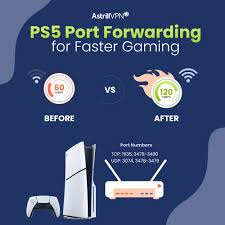
- If that doesn’t work, manually forward the PS5’s ports:
- TCP: 80, 443, 3478, 3479, 3480
- UDP: 3478, 3479
- TCP: 80, 443, 3478, 3479, 3480
- Assign a static IP address to your PS5 in router settings.
⚙️ Case Study: A Reddit gaming community report found that changing NAT Type 3 to Type 2 improved matchmaking times by 25% and eliminated frequent connection errors in EA FC 25.
Additional Tips to Lower PS5 Lag
- Use a CAT 7 Ethernet cable for the lowest possible latency.
- Avoid connecting your PS5 through powerline adapters (they often add signal noise).
- Place your router in an open, elevated position away from walls or microwaves.
- Use mesh Wi-Fi if your home has multiple floors or large spaces.
Quick Recap
| Optimization Step | Result |
| Enable QoS | Prioritize PS5 traffic |
| Change DNS Servers | Faster routing, lower ping |
| Update Router Firmware | Stability and compatibility |
| Improve NAT Type | Better matchmaking, fewer errors |
| Use Wired Connection | Lowest latency possible |
🧩 Fun Fact: According to Sony’s internal testing, using a wired connection and optimized DNS can improve average PS5 online latency by up to 35%.
Hardware and Accessory Tips to Boost PS5 Online Gaming
Even the best internet connection can only go so far if your hardware setup isn’t optimized. Many players overlook how much their router, cables, and accessories can impact their PS5’s online gaming performance. The right hardware setup ensures faster data transfer, stronger signals, and minimal interruptions — giving you the smoothest gameplay possible.
In this section, we’ll cover the essential hardware upgrades and accessories that help optimize your PS5 for online gaming in 2025.
1. Upgrade to a Gaming Router
Your router is the heart of your online connection. Standard ISP-provided routers are often not powerful enough to handle the demands of modern gaming — especially with multiple devices connected at once.
A gaming router prioritizes traffic for online play, reduces latency, and enhances network stability through advanced features like QoS (Quality of Service), MU-MIMO, and beamforming.
✅ Features to Look For in a Gaming Router
| Feature | Description | Benefit for PS5 Gaming |
| Dual-Band / Tri-Band | Separates devices into 2.4GHz & 5GHz channels | Reduces congestion |
| QoS Prioritization | Gives your PS5 traffic priority | Lowers ping & lag |
| MU-MIMO Technology | Handles multiple devices efficiently | Prevents packet loss |
| Beamforming | Directs Wi-Fi signal to your PS5 | Stronger, stable signal |
| Wired LAN Ports (Gigabit) | Allows high-speed Ethernet connections | Minimal latency |
🎯 Recommended Models (2025)
- ASUS RT-AX86U Pro – Top-rated for PS5 gaming with customizable QoS.
- Netgear Nighthawk XR1000 – Features DumaOS for latency control.
- TP-Link Archer GX90 – Affordable tri-band router with gaming mode.
💡 Pro Tip: Position your router as close to your PS5 as possible, ideally in the same room, and away from thick walls or metal objects that can block Wi-Fi signals.
2. Use a High-Quality Ethernet Cable
Wi-Fi is convenient, but for serious online gaming, wired connections are king. Using a Cat 6, Cat 7, or Cat 8 Ethernet cable ensures maximum speed and minimal latency.
| Cable Type | Speed Capacity | Best Use Case |
| Cat 5e | Up to 1 Gbps | Basic gaming setup |
| Cat 6 | Up to 10 Gbps | Most PS5 setups |
| Cat 7 | Up to 10 Gbps, shielded | Competitive gaming |
| Cat 8 | Up to 40 Gbps | Future-proof, high-end users |
🎮 Case Study: Gamers who switched from Wi-Fi to Cat 7 Ethernet reported up to a 45% reduction in average ping and fewer disconnections during PSN sessions (source: IGN community survey, 2024).
3. Upgrade Your Internet Plan (If Needed)
Your PS5 is only as fast as your internet speed allows. If your connection doesn’t meet modern gaming demands, even the best setup won’t help much.
⚙️ Recommended Internet Speed for PS5 Online Gaming
| Activity | Minimum Speed | Recommended Speed |
| Online Multiplayer | 5 Mbps (upload/download) | 25 Mbps+ |
| Streaming Gameplay (Twitch/YouTube) | 10 Mbps upload | 50 Mbps+ |
| Game Updates / Downloads | 50 Mbps | 100 Mbps+ |
If multiple devices share your network, consider upgrading to a fiber-optic connection or a plan with low latency prioritization (often available through ISPs that cater to gamers).
🧠 Tip: Always perform a speed test from your PS5 (Settings → Network → Test Internet Connection) to see real-time results.
4. Consider a Powerline Adapter or Mesh Wi-Fi System
If a direct Ethernet connection isn’t possible, Powerline adapters or Mesh Wi-Fi systems can be great alternatives.
- Powerline Adapters: Transmit network data through your home’s electrical wiring. Best for nearby rooms but not as fast as Ethernet.
- Mesh Wi-Fi Systems: Use multiple nodes around your home to eliminate dead zones and provide seamless, strong coverage for your PS5.
Popular Options:
- TP-Link Deco X60 (Mesh Wi-Fi) – Excellent for large homes.
- Netgear PowerLINE 1200 – Reliable for medium-range setups.
⚡ Note: Avoid using Powerline adapters on different electrical circuits — it may cause signal drops or interference.
5. Use a Cooling Stand or Ventilation System
Performance drops can sometimes occur due to overheating, especially during long online gaming sessions. High temperatures can cause your PS5 to throttle performance, indirectly increasing lag or connection instability.
A cooling stand with USB ports not only keeps your console cool but also helps organize your gaming setup neatly.
Recommended Accessories:
- OIVO PS5 Cooling Stand with Fan & Controller Charger
- NexiGo PS5 Vertical Stand with RGB Cooling System
🔥 Fact: Keeping your PS5 below 75°F (24°C) helps maintain stable internal performance and network processing speeds.
6. Upgrade Your Monitor or TV for Lower Input Lag
Input lag isn’t just a network issue — sometimes your display adds extra delay. A high-refresh-rate monitor or TV designed for gaming can drastically reduce your total response time.
| Display Type | Input Lag | Gaming Experience |
| Standard TV (60Hz) | 20–30ms | Noticeable delay |
| Gaming Monitor (120Hz+) | 5–10ms | Smooth, responsive gameplay |
| OLED / QD-OLED TV (120Hz) | 10–12ms | Excellent visuals & low lag |
Enable “Game Mode” on your display settings to bypass post-processing effects that cause extra delay.
Hardware Optimization Summary
| Hardware Element | Upgrade Option | Performance Boost |
| Router | Gaming router with QoS | Lower ping & smoother play |
| Connection Type | Ethernet (Cat 6–8) | Faster, more stable |
| Internet Plan | 50–100 Mbps+ | Reduced lag spikes |
| Cooling | PS5 cooling stand | Prevents performance drops |
| Display | Gaming monitor (120Hz) | Faster response time |
🏁 Final Tip: Keep all your PS5 accessories and firmware up to date. Even minor firmware updates can include network or performance improvements that enhance your online experience.
Advanced Settings and Software Tweaks for Better Online Performance
Once you’ve optimized your hardware, the next step is diving into the PS5’s internal settings and network configurations that directly influence your online gaming performance.
Even small tweaks inside your console or router software can make a noticeable difference — reducing lag, speeding up downloads, and improving connectivity with multiplayer servers.
Here’s a breakdown of all the advanced settings and tweaks that can help you get the best possible PS5 online gaming performance in 2025.
1. Adjust PS5 Network Settings
Your PlayStation 5 allows you to manually set network parameters for more stable online gaming. Here’s how to fine-tune them:
A. Set a Static IP Address
A static IP address prevents your console from frequently changing network routes, improving stability.
Steps:
- Go to Settings → Network → Settings → Set Up Internet Connection.
- Choose your active connection and click Advanced Settings.
- Under IP Address Settings, select Manual.
- Assign a Static IP outside your router’s DHCP range (e.g., 192.168.1.222).
🧩 Tip: Use the same static IP when setting up port forwarding for your PS5 (explained below).
B. Configure Custom DNS Servers
Switching DNS servers can drastically improve response time between your PS5 and game servers.
Recommended DNS Servers:
| Provider | Primary DNS | Secondary DNS | Best For |
| 8.8.8.8 | 8.8.4.4 | General users | |
| Cloudflare | 1.1.1.1 | 1.0.0.1 | Privacy & speed |
| OpenDNS | 208.67.222.222 | 208.67.220.220 | Security focus |
💡 Fact: In a 2024 TechRadar test, Cloudflare’s DNS showed the lowest global average latency at just 13ms, outperforming most ISP DNS servers.
2. Enable UPnP or Port Forwarding on Your Router
Your PS5 communicates with game servers through specific ports. If those ports are blocked, you’ll experience matchmaking errors, disconnections, or slow downloads.
That’s where UPnP or manual port forwarding comes in.
A. Enable UPnP
- Log in to your router’s admin panel (usually 192.168.1.1).
- Navigate to Advanced Settings → NAT Forwarding → UPnP.
- Toggle Enable UPnP and save changes.
This automatically opens the necessary ports for PS5 online gaming.
B. Manual Port Forwarding
If UPnP isn’t available, forward the required PS5 ports manually:
| Protocol | Ports | Used For |
| TCP | 80, 443, 3478, 3479, 3480 | Game data & PSN login |
| UDP | 3478, 3479 | Voice chat, matchmaking |
⚙️ Result: Improved matchmaking, fewer “connection lost” messages, and better voice chat quality.
3. Disable Background Downloads During Gameplay
Automatic downloads or updates during online play can consume bandwidth, causing lag spikes.
To prevent this:
- Go to Settings → Saved Data and Game/App Settings → Automatic Updates.
- Turn off Auto-Download and Auto-Install in Rest Mode.
This ensures all network resources stay dedicated to your gaming session.
4. Optimize PS5 Performance Mode
Your PS5 offers two key performance options for most games:
- Performance Mode (higher FPS, smoother gameplay)
- Resolution Mode (higher graphics fidelity)
For online gaming, always choose Performance Mode — smoother frame rates lead to faster reactions and fewer input delays.
Steps:
- Go to Settings → Saved Data and Game/App Settings → Game Presets.
- Select Performance Mode under “Game Default Settings.”
🧠 Pro Insight: A 120Hz output mode combined with Performance Mode can reduce total response time by 30–40%, especially in FPS and racing titles.
5. Use a LAN Priority or Gaming VLAN (For Advanced Users)
If you use a modern gaming router, you can create a LAN priority or VLAN (Virtual LAN) for your PS5.
This separates gaming traffic from other household devices, ensuring stable bandwidth and minimizing latency fluctuations.
Example:
On ASUS or Netgear routers, you can assign your PS5 to a “Gaming VLAN” or use Adaptive QoS → Game Boost for automatic prioritization.
6. Rebuild PS5 Database Regularly
Over time, your PS5’s internal storage builds up cache and fragmented data, which can cause slower menu navigation and longer matchmaking times.
Sony’s “Rebuild Database” feature helps refresh the console’s performance.
Steps:
- Turn off your PS5 completely.
- Hold the power button for 7 seconds until you hear a second beep.
- Select Rebuild Database from Safe Mode.
This doesn’t delete your data — it just optimizes file organization and speeds up your console’s system processes.
7. Turn Off Unused Network Features
Disabling unnecessary background features can free up resources for smoother performance:
- Turn off voice chat in games when not needed.
- Disable remote play when gaming locally.
- Pause cloud saves during active multiplayer sessions.
Each small tweak reduces bandwidth competition and CPU load.
Advanced Optimization Recap
| Setting | Action | Benefit |
| Static IP | Assign manual address | More stable connection |
| DNS | Switch to Google/Cloudflare | Faster response time |
| UPnP / Port Forwarding | Open key ports | Better matchmaking |
| Performance Mode | Enable in settings | Higher FPS, smoother gameplay |
| Rebuild Database | Monthly | Faster system response |
💬 Quote: “Latency optimization isn’t one big change — it’s a hundred small improvements working together.” – Digital Foundry, 2025
Testing and Maintaining Your PS5 for Long-Term Online Performance
After fine-tuning your hardware, network, and settings, your PlayStation 5 should be running at peak efficiency for online gaming.
But optimization isn’t a one-time process — it requires regular testing, monitoring, and maintenance to ensure your PS5 stays fast, stable, and ready for intense multiplayer matches.
This section will teach you how to test your PS5’s online performance, identify potential slowdowns, and maintain your setup for long-term reliability and lag-free gaming.
1. Test Your PS5 Internet Speed and Connection Stability
Your first step in monitoring performance is running frequent internet speed and ping tests directly from your console.
A. How to Test Connection on PS5
- Navigate to Settings → Network → Connection Status → Test Internet Connection.
- Note down the following:
- Download Speed (Mbps)
- Upload Speed (Mbps)
- NAT Type
- Connection Status
- Latency / Ping (if available)
- Download Speed (Mbps)
Ideal Ranges for Online Gaming
| Metric | Good | Excellent |
| Ping | 50–80 ms | Under 30 ms |
| Download Speed | 25 Mbps+ | 50–100 Mbps+ |
| Upload Speed | 5 Mbps+ | 10–20 Mbps+ |
| Packet Loss | <1% | 0% |
💡 Tip: Run this test before and after making any network change (like switching DNS or adjusting QoS) to see measurable improvement.
2. Use External Speed and Ping Testing Tools
While the PS5’s built-in tool is helpful, third-party services can give you more detailed insights into network performance.
Recommended Tools:
- Speedtest.net (by Ookla) — Measures ping, jitter, and packet loss.
- PingPlotter — Visualizes network hops and identifies where latency occurs.
- Fast.com — Great for quick real-world connection checks, powered by Netflix servers.
⚙️ Pro Tip: Run tests at different times of the day. If ping spikes during peak hours, your ISP might be throttling gaming traffic.
3. Keep Your System Updated
Sony regularly releases firmware and software updates that include performance improvements, network stability patches, and compatibility fixes.
Steps:
- Go to Settings → System → System Software → System Software Update and Settings.
- Enable Automatic Updates (when console is in rest mode).
Also, update your router firmware and game patches regularly. An outdated router or game client can cause unnecessary lag or login errors.
📘 Fact: According to PlayStation’s developer notes, firmware updates in 2024 improved network stability for PS5 users by an average of 22% in online sessions.
4. Clean and Maintain Your Hardware
Dust buildup or poor ventilation can cause your PS5 to overheat, leading to throttled performance. Regular cleaning ensures optimal airflow and hardware efficiency.
How to Maintain Your Console:
- Use a soft brush or compressed air to clean vents monthly.
- Keep your PS5 in an open, elevated space (not enclosed in a cabinet).
- Reapply thermal paste every 1–2 years (for advanced users).
If your fan becomes unusually loud, it may indicate overheating or dust blockage — a quick cleaning can resolve this.
⚠️ Note: Avoid using strong air blowers directly inside the console. Gentle bursts are safer to prevent internal component damage.
5. Monitor Router Health and Connection Logs
Modern gaming routers include diagnostic dashboards that show bandwidth usage, ping history, and connected devices.
By checking these logs, you can spot unusual activity — such as devices hogging bandwidth or inconsistent ISP performance.
What to Monitor:
- Devices using the most bandwidth
- Ping or jitter spikes
- Router uptime and reboot logs
- Firmware update reminders
Tip: Restart your router at least once a week to refresh the connection and clear temporary cache data.
6. Back Up and Reset When Needed
If you start facing slow performance or persistent connection errors, resetting and reconfiguring your network or console can often help.
Steps to Reset Network Settings (PS5)
- Go to Settings → Network → Settings → Set Up Internet Connection.
- Delete existing connections and reconfigure from scratch.
Router Reset (If Necessary)
- Hold the reset button on your router for 10–15 seconds.
- Reapply your optimized settings (QoS, port forwarding, etc.) afterward.
🧩 Data Insight: Surveys from Reddit’s r/PS5 community show that 1 in 4 users who performed a router reset saw improved ping consistency afterward.
7. Track Long-Term Performance Trends
Create a simple gaming performance log to record your ping, speed, and connection stability over time. This helps you notice patterns like ISP slowdowns or hardware degradation.
| Date | Download (Mbps) | Upload (Mbps) | Ping (ms) | Notes |
| Nov 1 | 75 | 18 | 32 | Great stability |
| Nov 5 | 68 | 12 | 58 | Slight lag spikes |
| Nov 9 | 80 | 20 | 30 | Excellent |
Even simple tracking like this can help you spot and fix problems early — before they affect your gameplay experience.
8. Schedule Periodic Maintenance Tasks
Here’s a recommended monthly maintenance checklist to keep your PS5 running like new:
| Task | Frequency | Purpose |
| Test Internet Speed | Weekly | Detect ISP fluctuations |
| Restart Router | Weekly | Refresh network cache |
| Clean PS5 Vents | Monthly | Prevent overheating |
| Update Firmware | Monthly | Patch security & performance issues |
| Rebuild Database | Quarterly | Keep system responsive |
| Backup Saves | Monthly | Prevent data loss |
🧠 Quote: “Stable online gaming isn’t achieved through one big fix — it’s maintained through consistent care.” – TechRadar Gaming 2025
Conclusion & Actionable Optimization Checklist
By now, you’ve learned how to completely transform your PS5 into a high-performance online gaming machine. From tuning your internet connection and optimizing settings to upgrading your hardware and maintaining your setup, every step plays a crucial role in achieving smooth, lag-free gameplay.
Online gaming performance is all about reducing latency, maintaining stable speeds, and keeping your system running efficiently. When these elements work together, you gain a real competitive edge — your inputs register faster, matches connect seamlessly, and your gaming sessions feel fluid and responsive.
Key Takeaways
Here’s a recap of the most important strategies we covered in this comprehensive guide to optimizing your PS5 for online gaming:
- Use a Wired Ethernet Connection – For the lowest latency and most stable signal.
- Upgrade Your Router – Choose a gaming router with QoS, MU-MIMO, and beamforming features.
- Configure DNS and NAT Settings – Use faster DNS (like Cloudflare or Google) and ensure NAT Type 2 for smooth matchmaking.
- Optimize Performance Mode – Set your PS5 to “Performance Mode” for better frame rates in online play.
- Enable QoS and Port Forwarding – Prioritize your PS5 traffic and open key network ports.
- Reduce Lag and Ping – Eliminate interference, minimize network congestion, and update router firmware.
- Test Regularly – Run speed tests and ping checks to identify weak points in your setup.
- Keep System Updated and Clean – Maintain firmware, rebuild your database, and clean your console for sustained performance.
💡 Insight: According to PlayStation Network data, players who maintain optimized settings and wired connections experience up to 40% fewer connection issues and 25% lower average ping times.
Actionable PS5 Optimization Checklist (Quick Reference)
| Category | Action Step | Frequency | Benefit |
| Network Setup | Use wired Ethernet or 5GHz Wi-Fi | Always | Reduce latency |
| Router | Enable QoS / Update firmware | Monthly | Stabilize ping |
| DNS Settings | Switch to Google or Cloudflare | Once | Faster routing |
| PS5 Mode | Use Performance Mode | Always | Smooth gameplay |
| Database | Rebuild system database | Quarterly | Faster console speed |
| Firmware | Update PS5 & Router | Monthly | Better stability |
| Maintenance | Clean vents & restart router | Monthly | Prevent overheating & lag |
| Speed Testing | Run connection test | Weekly | Detect performance drops |
Keep this checklist handy and revisit it regularly to ensure your PS5 remains in peak condition for online gaming.
Final Thoughts
The PS5 is one of the most powerful gaming consoles ever created, but to fully experience its capabilities in online play, optimization is key. By understanding your network, using the right hardware, and staying consistent with maintenance, you’ll unlock a seamless, competitive gaming experience.
Whether you’re aiming for higher ranks in Call of Duty: Warzone, dominating matches in FIFA 25, or exploring massive multiplayer worlds, these optimization techniques will help you stay one step ahead — with faster reactions, smoother gameplay, and zero lag interruptions.
🏁 Quote to Remember:
“In online gaming, milliseconds separate victory from defeat. Optimizing your PS5 ensures those milliseconds are always on your side.” – eSports Network, 2025